

2026东南大学–瑞典皇家理工学院暑期学校
水韧乡村:面向气候适应的乡村研究与设计实践
2026 SEU-KTH SUMMER SCHOOL
Aqua-Resilient Rural Revitalization: Research and Design Practice for Climate-Adaptive Rural Futures
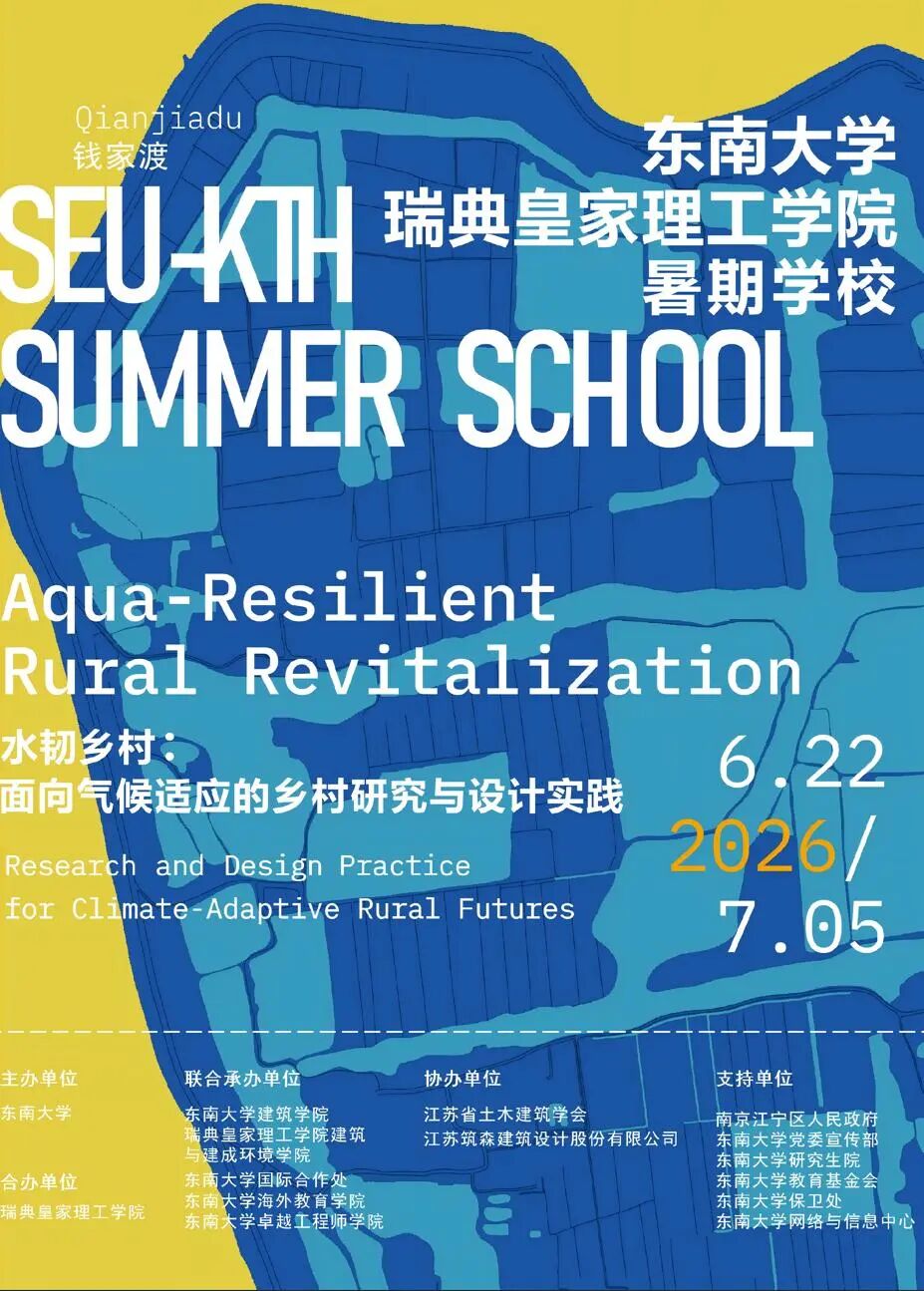
主办单位:东南大学
合办单位:瑞典皇家理工学院
联合承办单位:williamhill英国官网、瑞典皇家理工学院建筑与建成环境学院、东南大学国际合作处、东南大学海外教育学院、东南大学卓越工程师学院
协办单位:江苏省土木建筑学会、江苏筑森建筑设计股份有限公司
支持单位:南京江宁区人民政府、东南大学党委宣传部、东南大学研究生院、东南大学教育基金会、东南大学保卫处、东南大学网络与信息中心
基于东南大学-瑞典皇家理工学院的多年合作交流成果,2026年6月22日至7月5日,两校共同举办以“水韧乡村:面向气候适应的乡村研究与设计实践”(Aqua-Resilient Rural Revitalization: Research and Design Practice for Climate-Adaptive Rural Futures)的首届国际暑期学校及学术研讨会活动。
全球气候变化加剧、水资源压力上升、生态环境风险频发,乡村地区正面临干旱、洪涝、水资源短缺、基础设施脆弱及生态退化等多重挑战。在此背景下,绿色基础设施、低碳建成环境、乡村空间治理、健康景观设计与蓝绿系统优化正不断重塑乡村社区的发展模式。然而,现有研究仍多集中于单一领域,针对“水韧性乡村振兴”的跨学科整合研究和国际学术交流仍显不足,亟需在政策、规划、建筑、景观及生态治理等多个层面开展系统性合作与知识共享。
本次活动主题以钱家渡实景为课堂,以水为核心线索,贯通调研、设计、跨文化研讨全过程,既回应江南水乡乡村发展真实痛点,探索水韧性导向下生态、空间、产业协同振兴的本土化路径,又借助国际青年交流拓宽研究视野,培养兼具生态思维、规划实操能力与全球视野的复合型城乡建设人才。
Building on years of collaborative exchanges between SEU and KTH, the two institutions will co-host the inaugural international summer school and academic symposium themed Aqua-Resilient Rural Revitalization: Research and Design Practice for Climate-Adaptive Rural Futures, running from June 22 to July 5, 2026.
Escalating global climate change, mounting water resource pressures and frequent ecological hazards have exposed rural areas to compound threats including droughts, floods, water scarcity, fragile infrastructure and ecosystem degradation. Against this backdrop, green infrastructure, low-carbon built environments, rural spatial governance, healthy landscape design and blue-green system optimization are reshaping development paradigms for rural communities. Nevertheless, existing research remains largely confined to isolated disciplines. Interdisciplinary integrated studies and international academic exchanges focused on water-resilient rural revitalization remain insufficient, calling for systematic cooperation and knowledge sharing across policy, planning, architecture, landscape architecture and ecological governance.
Taking the real-site context of Qianjiadu as a living classroom and water as the core thematic thread, this program integrates field investigation, design practice and cross-cultural discussion throughout its whole process. It addresses practical bottlenecks hindering the development of Jiangnan water towns and explores localized pathways for coordinated ecological, spatial and industrial revitalization guided by water resilience. Meanwhile, through international youth dialogue, participants expand their research outlooks, fostering interdisciplinary urban-rural development professionals equipped with ecological literacy, hands-on planning competencies and global vision.
01
主题
THEME
水韧乡村:面向气候适应的乡村研究与设计实践
Aqua-Resilient Rural Revitalization: Research and Design Practice for Climate-Adaptive Rural Futures
本次以南京钱家渡村为实践载体的国内外学生暑期学校,面向基于乡村振兴的水环境治理、水韧性营建、乡村空间规划主题,通过学术创新探索与技术学习,系统性掌握城乡水韧性设计技术理念,并包含环境实地调研、乡村水利设施设计、景观设计等实践模块,搭建中外跨学科交流平台。
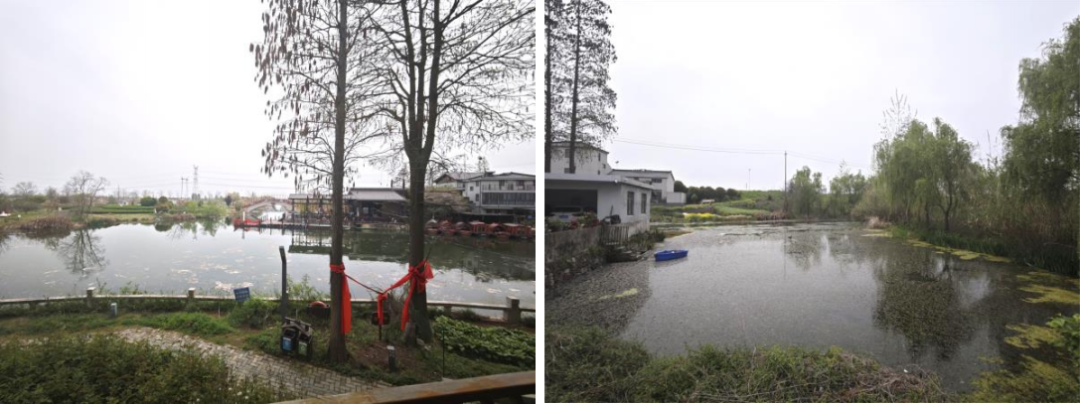
本次主题回应乡村振兴战略、海绵城市建设、环境韧性体系建设需求。乡村水系是江南水乡生态基底,也是人居环境、产业发展、乡土文化的核心纽带。当下江南乡村普遍面临河道淤堵、雨洪内涝、污水散排、水系景观碎片化、滨水空间利用低效等共性难题,传统治水多侧重单一排污治理,忽视水系统韧性、乡村产业联动与乡土风貌保护。钱家渡作为南京近郊典型水乡村落,兼具原生圩田水系、传统民居、农耕文旅产业,存在水环境提质、滨水空间更新、应对极端降雨的水韧性改造等现实需求,是诠释水生态赋能乡村振兴的绝佳样本,为中外学生提供可触摸、可落地的真实课题场景。
课题设计中融合了多学科的角度,打通环境科学、城乡规划、建筑学、景观设计、水利工程多专业局限性。前期水环境实地调查为设计提供基础,国内外学生将分组完成村落水系水文环境考察、河道生态基底踏勘、居民水文化学习,量化梳理水安全、水生态、水民生现存矛盾,形成现状分析结果。后续开展以水环境设施为核心的设计工作坊,将调研成果转化为空间方案,可包含桥梁、商业设施、水利设施、日常休闲设施等与水环境文化相融合的基础设施,统筹建筑布局、景观水系、防洪排涝体系,跳出单纯工程治水思维,将水韧性作为核心设计目标,实现灾时调蓄、平时景观、常年净水的复合功能。
国际研讨会将聚焦“水韧性乡村振兴”核心议题,围绕“气候变化、水资源治理与生物多样性保护”、“绿色基础设施、可持续建成环境与乡村空间转型”、“生态空间治理、社区更新与乡村韧性规划”、“健康景观设计、蓝绿系统优化与跨学科生态修复”四大方向,系统探讨气候变化与水资源压力背景下乡村社区可持续发展的关键路径。
水危机、乡村衰退是全球城乡共同挑战,瑞典学生可带来欧美生态海绵乡村、低影响开发、水韧性建设相关的理论与实践经验,国内学生则输出江南圩田农耕水文化、本土村落营建智慧。中外青年协作研讨,对比不同国家水环境治理路径,在碰撞中辩证思考。
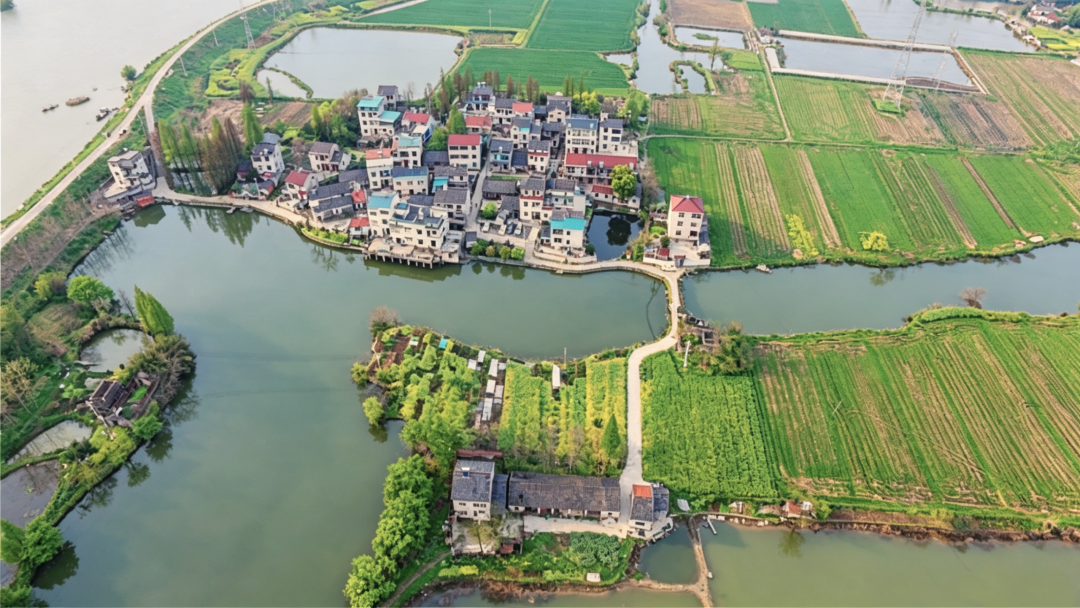
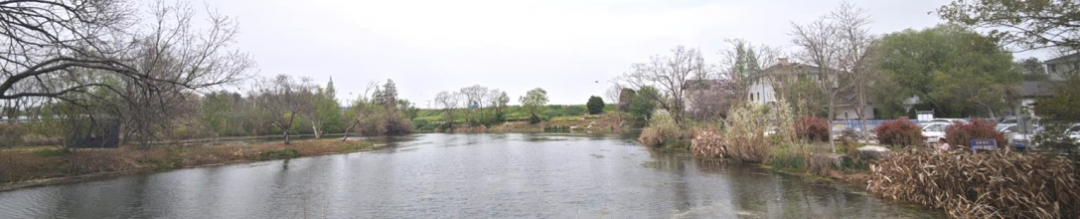
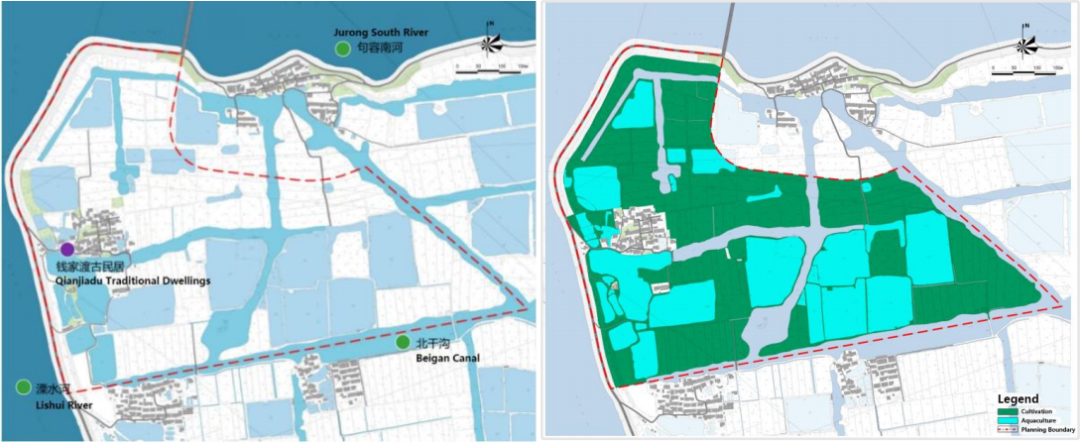
This summer school for Chinese and international students takes Qianjiadu Village in Nanjing as its practical site. Centered on water environment governance, water-resilient construction and rural spatial planning for rural revitalization, it enables participants to systematically grasp technical philosophies of urban-rural water-resilient design through academic innovation and technical training. It integrates practical modules including field environmental surveys, rural water conservancy facility design and landscape architecture, building an interdisciplinary exchange platform for Chinese and overseas participants.
The theme aligns with strategies of rural revitalization, sponge city development and environmental resilience system construction. As the ecological foundation of Jiangnan water towns, rural water networks serve as a vital bond linking living environments, industrial growth and local culture. Currently, villages across Jiangnan face shared troubles: river siltation, rainwater flooding, scattered sewage discharge, fragmented aquatic landscapes and underutilized waterfront spaces. Conventional water management mostly focuses on sewage treatment alone, ignoring systemic water resilience, industrial integration and preservation of rural features. A typical waterside village on Nanjing’s outskirts, Qianjiadu boasts original polder water systems, traditional dwellings and agritourism industries. It has practical demands including water quality improvement, waterfront renewal and resilience upgrades against extreme rainfall, making it an ideal case demonstrating how aquatic ecology fuels rural revitalization and offering tangible, implementable research scenarios for students.
The curriculum breaks disciplinary barriers across environmental science, urban-rural planning, architecture, landscape design and hydraulic engineering. Pre-design field surveys lay groundwork; mixed Chinese-international teams conduct hydrological assessments, riverbed inspections and local water culture interviews. They quantify conflicts in water safety, ecology and livelihoods to compile baseline analyses. Subsequent design workshops translate survey data into spatial schemes, covering water-integrated infrastructure such as bridges, commercial buildings, hydraulic equipment and recreational amenities. Coordinating architectural layouts, aquatic landscapes and flood-drainage frameworks, the program prioritizes water resilience over engineering-only solutions to deliver multi-purpose systems: flood storage during disasters, scenic landscapes in ordinary times, and year-round water purification.
An international symposium centers on “Water Resilience for Rural Revitalization”, covering four tracks: climate change, water governance and biodiversity; green infrastructure, sustainable built environments and rural spatial transformation; ecological governance, community regeneration and resilient rural planning; healthy landscape design, blue-green system optimization and interdisciplinary ecological restoration. It explores viable pathways for sustainable rural communities amid climate and water resource strains.
Water crises and rural decline are universal urban-rural challenges. Swedish students share European and American expertise in eco-sponge villages, low-impact development and water-resilient construction, while Chinese students pass down wisdom of Jiangnan polder farming and vernacular village building. Young scholars exchange ideas, compare cross-border water governance models and engage in critical dialogue.
02
教学目标
TEACHING OBJECTIVES
01
通过量化的方法,分析水乡的特有水文特征并将水循环利用与防洪减灾的理念融入规划设计;
02
融合传统文化符号与现代设计元素,突出钱家渡村落的文化特色;
03
考虑本地居民、游客与营业者的多方需求,打造具有吸引力的节点空间,综合提升该村落的可持续性;
04
遵循微更新的原则,在现有环境中融入基础设施设计,平衡生态环境的保护与优化。
Teaching Objectives
1. Use quantitative methods to analyze the unique hydrological characteristics of the water town and integrate the concepts of water recycling and flood control and disaster mitigation into the planning and design;
2. Blend traditional cultural symbols with modern design elements to highlight the cultural distinctiveness of Qianjiadu Village;
3. Take into account the diverse needs of local residents, tourists, and business operators to create attractive focal spaces and comprehensively enhance the village’s sustainability;
4. Adhere to the principles of micro-renewal, integrating infrastructure design into the existing environment to balance the protection and optimization of the ecological environment.
03
课程安排
COURSE SCHEDULE

南京市内 Nanjing City
6.22-6.23
南京城市水利与历史地段考察研究
Field Study of Nanjing’s Urban Hydraulic System and Historic Districts
6.22:
校园参观
Campus tour
夫子庙、东水关、老门东考察:城市水系与生活、商业场景的融合
Field study of the Confucius Temple area, Dongshuiguan Water Gate, and Laomendong Historic District: The Integration of Urban Water Systems with Residential and Commercial Settings.
6.23:
中山陵片区考察:山地格局中的近代纪念建筑与历史地景
Field study of the Sun Yat-sen Mausoleum area: Modern memorial architecture and historic landscape in a mountain setting.
玄武湖、武庙闸考察:认知古代水利工程
Field study of Xuanwu Lake and Wumiaozha Sluice: Understanding Ancient Hydraulic Engineering Project.
南京Nanjing /钱家渡Qianjiadu
6.24-6.26
暑期学校开幕式、国际研讨与实践基地调研
Opening Ceremony, International Symposium, and Field Investigation at the Practice Base
6.24:
开幕式、国际研讨会
Opening ceremony and international symposium.
6.25:
实地调研钱家渡的水资源和规划建设现状
Field investigation of water resources, planning, and existing village conditions in Qianjiadu.
6.26:
建立基本设计理念,完成数据分析与概念发展
Development of basic design concepts based on data analysis.
南京市内 Nanjing City
6.27-6.28
国内外案例分析研讨
Case Study Seminar
四牌楼校区 Sipailou Campus
6.29-7.03
乡村节点创新设计工作营
Innovative Design Practice for Village Nodes
钱家渡Qianjiadu
7.04-7.05
结营成果汇报与闭营仪式相关活动
Final Presentation and Closing Ceremony Related Activities
04
教学团队
TEACHING TEAM
东南大学(SEU)
领队教授:王宇鹏
指导教师:李京津,徐宁,蔡子攀
参与学生:共18人
瑞典皇家理工学院(KTH)
领队教授:卡琳·埃德瓦尔德松·比约恩贝里
协调人:何颖方
指导教师:马格努斯·瓦林德,吴杰臣,萨哈尔·达拉梅,埃琳娜·卡尔利尼,弗朗切斯卡·萨维奥
参与学生:共15人
Teaching Team
Southeast University
Lead Professor: Wang Yupeng
Instructors: Li Jingjin, Xu Ning, Cai Zipan
Participating Students: 18 students
KTH Royal Institute of Technology
Lead Professor: Karin Edvardsson Björnberg
Coordinator: Yingfang He
Instructors: Magnus Wålinder, Jiechen Wu, Sahar Dalahmeh, Elena Carlini, Francesca Savio
Participating Students: 15 students
信息来源:建筑系党支部
审核:周文竹、张彤
